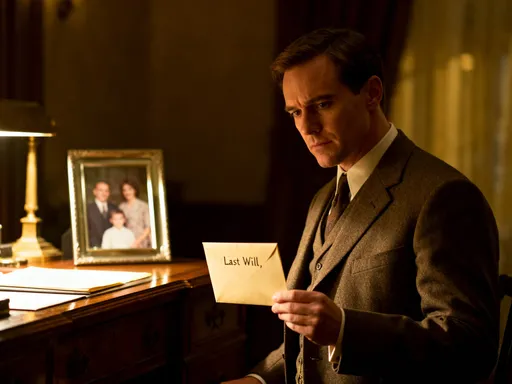
Why Timing Changes Everything in Charitable Giving from Your Estate
When I first thought about leaving money to charity in my estate plan, I assumed it was just a final decision—something to settle at the end. But after working through the process, I realized timing isn’t just detail—it’s everything. The moment you act can reshape your legacy, tax burden, and even family harmony. This isn’t just about writing a check later—it’s about making smarter moves now. What seemed like a simple bequest evolved into a strategic opportunity: to reduce taxes, increase impact, and communicate values clearly. The truth is, charitable giving from your estate is not a single event, but a series of thoughtful decisions shaped by when you choose to act. And for many families, especially those balancing long-term financial goals with deeply held values, the power of timing can make the difference between a well-intentioned gesture and a lasting legacy.
The Hidden Power of Timing in Estate Philanthropy
Most people approach charitable giving as an afterthought in estate planning—something added at the end, like a signature on a letter. But the reality is far more dynamic. The timing of your philanthropic decisions profoundly affects their financial and emotional outcomes. When you decide to act—years before any transfer occurs—can unlock tax advantages, deepen family understanding, and amplify your impact in ways that waiting simply cannot match. This isn’t about rushing; it’s about recognizing that charitable intent, when timed wisely, becomes a tool for greater control, clarity, and efficiency.
Consider two scenarios. In the first, a donor waits until finalizing a will late in life to name a charity as a beneficiary. The gift is made, the cause benefits, but little planning has gone into how the asset is structured or when it’s transferred. In the second, the same donor begins the conversation a decade earlier, setting up mechanisms that allow assets to grow, taxes to be minimized, and intentions to be shared openly. Though both result in giving, the second approach often leads to a larger gift, lower tax costs, and smoother transitions for heirs. The difference? Timing.
What many overlook is that timing shapes not only the size of the gift but also its ripple effects. A well-timed charitable decision can influence investment strategies, insurance planning, and even the way family members view wealth. For example, funding a donor-advised fund in midlife allows the account to grow tax-free over years, increasing the eventual contribution. Similarly, designating a charity as a beneficiary of a retirement account avoids both income and estate taxes—benefits only available if the structure is in place well before death. These are not minor details; they are fundamental levers of financial strategy.
Moreover, timing affects perception. A gift planned early signals intentionality. It shows that philanthropy is not an afterthought but a core value. This can inspire children and grandchildren to engage with causes, ask questions, and eventually carry forward a culture of giving. In contrast, a surprise bequest—especially one that reduces the inheritance—can breed confusion or resentment. The emotional weight of a gift is often determined not by its size but by how and when it was discussed. By acting early, donors gain the opportunity to shape that narrative, ensuring their legacy is understood and honored.
Why Early Planning Beats Last-Minute Decisions
There’s a common misconception that estate planning, especially charitable components, should wait until later in life. Many believe it’s unnecessary until assets are substantial or health declines. But delaying decisions about charitable giving can severely limit options and reduce benefits. Early planning isn’t about predicting the future—it’s about creating flexibility for it. When you integrate philanthropy into your financial strategy years in advance, you open doors to tools and tax advantages that simply aren’t available at the last minute.
Take the donor-advised fund (DAF), one of the most accessible and powerful vehicles for charitable giving. By contributing to a DAF today, you can claim an immediate tax deduction while retaining the ability to recommend grants to charities over time. If you wait until your estate is settled, that opportunity is lost. The deduction is no longer relevant, and the assets may be subject to higher taxation. But by acting early, you lock in tax savings during your highest earning years, when deductions are most valuable, and allow the funds to grow tax-free before being distributed to causes you care about.
Similarly, charitable remainder trusts (CRTs) require time to deliver their full benefit. These trusts allow you to transfer appreciated assets—like stocks or real estate—into a trust that pays you (or a beneficiary) income for life, after which the remainder goes to charity. The donor receives an immediate income tax deduction based on the present value of the future gift, and capital gains taxes are avoided when the asset is sold within the trust. However, this structure only works if set up well in advance. A last-minute attempt to create a CRT may face administrative delays, legal hurdles, or simply not yield enough time for the trust to generate meaningful income or tax savings.
Early planning also reduces the risk of family conflict. When heirs are unaware of charitable intentions, they may assume they are entitled to the full estate. Discovering a significant portion has been directed to charity only after a parent’s passing can lead to disputes, even legal challenges. But when conversations happen early, and documents are explained, families have time to process, ask questions, and understand the reasoning. This transparency builds trust and prevents misunderstandings that can fracture relationships. Planning early isn’t just financially smart—it’s emotionally wise.
Additionally, tax laws change. What is advantageous today may not be in ten years. By acting now, you lock in current rules and avoid the uncertainty of future legislation. For example, the federal estate tax exemption is historically high as of 2024, but it is scheduled to sunset in 2026, potentially cutting the exemption in half. Donors who wait may find themselves subject to higher estate taxes, reducing the amount available for both heirs and charities. Those who plan early can structure gifts to maximize today’s favorable environment, ensuring their intentions are carried out as intended.
The Tax Ripple Effect: How Giving Now Can Save More Later
One of the most powerful yet underappreciated aspects of charitable giving is its tax ripple effect. The timing of a gift—whether during life or at death—triggers different tax consequences that can significantly impact both the donor’s estate and the final amount received by the charity. Many assume that leaving money to charity in a will is enough to gain tax benefits, but the reality is more nuanced. Posthumous gifts reduce the size of the taxable estate, potentially lowering or eliminating estate taxes. However, not all estates are large enough to owe estate tax, meaning this benefit may not apply. In contrast, lifetime gifts can generate income tax deductions, avoid capital gains taxes, and preserve more wealth for heirs.
Consider the case of appreciated stock. If you hold shares that have increased significantly in value, selling them would typically trigger capital gains taxes. But if you donate those shares directly to a qualified charity—or into a donor-advised fund—you avoid the capital gains tax entirely and receive a deduction for the full fair market value. This dual benefit is only available during life. After death, the cost basis of assets is stepped up, eliminating capital gains tax for heirs, but also removing the incentive to donate appreciated assets. In other words, the optimal window for this strategy is now, not later.
Another key factor is the timing of the tax deduction. Income tax deductions are most valuable when your income is higher. For many, peak earning years occur in midlife—precisely when estate planning is often deprioritized. By making charitable contributions during these years, donors can reduce their taxable income when it matters most. A $50,000 donation in a year when income is $250,000 may save over $15,000 in taxes, depending on tax brackets and deductions. The same donation made through an estate, after income has ceased, provides no such benefit. The charity receives the same amount, but the donor’s estate loses a valuable tax-saving opportunity.
Furthermore, retirement accounts represent a prime opportunity for tax-smart giving. Traditional IRAs and 401(k)s are fully taxable to heirs as ordinary income. By naming a charity as the beneficiary of these accounts, the distribution escapes both income and estate taxes. This is one of the most tax-efficient ways to give. But again, this requires advance planning. Beneficiary designations must be updated, and the decision should be coordinated with the overall estate plan to ensure heirs are not unintentionally disinherited. Acting early allows for careful review and adjustment, ensuring that the right assets go to the right recipients under the most favorable tax conditions.
The ripple effect extends beyond taxes. When charitable giving is integrated early into financial planning, it influences other decisions—such as life insurance, gifting strategies, and trust structures. For example, some donors use life insurance to replace the value of a charitable gift, ensuring heirs receive a tax-free death benefit while the donor still achieves their philanthropic goals. These layered strategies require time and coordination, reinforcing the advantage of early action.
Matching Gifts and Campaigns: Riding the Momentum
Charitable giving doesn’t have to be static. While bequests are often seen as fixed promises made in wills, they can actually be part of a dynamic, time-sensitive strategy. Many nonprofits run capital campaigns, challenge grants, or matching gift programs that multiply the impact of individual contributions. By aligning estate gifts with these opportunities—even through future commitments—donors can significantly increase their influence. The key is timing: knowing when to pledge, how to structure the promise, and how to communicate it to the organization.
For instance, a university might launch a $50 million campaign to expand its scholarship program, with a challenge that every dollar raised will be matched up to $25 million. A donor who pledges a $100,000 bequest as part of this campaign may qualify for recognition in the matching pool, effectively doubling the impact of their gift—even though the funds won’t be received for years. Some organizations even allow donors to count future estate gifts toward current campaign totals, giving them access to naming opportunities, events, or leadership circles during their lifetime. This transforms a deferred gift into an active form of engagement.
Similarly, faith-based organizations, hospitals, and community foundations often run time-limited initiatives that benefit from multi-year or estate-based commitments. By coordinating with these campaigns, donors can ensure their gifts arrive when they are most needed. A bequest structured to fund a specific program—like a nursing scholarship or a food pantry expansion—can be timed to coincide with the organization’s growth plans, creating a legacy of support that aligns with institutional momentum.
This approach also strengthens the relationship between donor and charity. When a donor shares their estate intentions early, the organization can express gratitude, involve them in events, and provide updates on how their future gift will be used. This ongoing connection fosters trust and ensures that the donor’s values are honored. In contrast, a bequest discovered only after death may go unrecognized, diminishing the emotional satisfaction of giving. By timing the communication of intentions, donors can experience the joy of seeing their legacy take shape.
Moreover, some charities offer legacy societies or stewardship programs for estate donors. Membership often comes with invitations to special events, newsletters, and personal updates. These benefits are only accessible if the donor informs the organization in advance. Waiting until death means missing out on years of meaningful connection. For many, this relational aspect is as important as the financial impact. Early communication turns a transaction into a partnership, enriching the giving experience for everyone involved.
Family Conversations That Prevent Future Conflict
One of the most overlooked aspects of charitable estate planning is communication. Many donors hesitate to discuss their intentions, fearing discomfort or appearing self-righteous. But silence can be far more damaging. When heirs learn about a charitable bequest only after a parent’s passing, it can come as a surprise—or worse, a betrayal. Even a modest gift can feel like a loss if it wasn’t anticipated. These emotional reactions can lead to disputes, delays in probate, or even legal challenges to the will. The solution isn’t to reduce giving, but to talk about it—early and often.
Open conversations about charitable intentions serve multiple purposes. They allow donors to explain the values behind their decisions, helping heirs understand why certain causes matter. They provide an opportunity to clarify the structure of the gift—whether it’s a percentage of the estate, a specific asset, or a fixed dollar amount. And they give family members time to adjust their own expectations, reducing the shock of an unexpected reduction in inheritance. These discussions don’t have to be formal; they can happen during family gatherings, estate planning meetings, or even casual conversations over dinner.
Transparency also helps prevent misunderstandings about fairness. If one child knows their sibling is receiving a family home while a charity receives investment assets, the arrangement can feel balanced—especially if the values are explained. But without context, the same distribution might seem unequal. By discussing the plan, donors can emphasize that their goal is not to divide wealth equally, but equitably—taking into account each heir’s needs, responsibilities, and relationship to the family’s values.
Some families find it helpful to include charitable discussions in broader financial education. Parents might use their estate plan as a teaching moment, explaining how wealth can serve both family and society. They might involve children in selecting charities, visiting nonprofits, or even making small joint donations. These experiences build a culture of giving that outlasts any single gift. When children grow up seeing philanthropy as a normal part of financial life, they are more likely to support—and continue—the legacy.
The timing of these conversations is crucial. Starting too late increases the risk of unresolved emotions; starting too early allows for gradual understanding. Many financial advisors recommend beginning the discussion in midlife, well before any documents are signed. This gives everyone time to process, ask questions, and offer input. It also allows the donor to revise their plan if new concerns arise. Communication isn’t a one-time event—it’s an ongoing process that strengthens family bonds and ensures the estate plan reflects shared values.
Tools That Let You Adapt: Flexible Giving Strategies
Life is unpredictable. Careers change, family needs evolve, and financial markets fluctuate. A rigid estate plan can quickly become outdated, leaving donors unable to respond to new realities. That’s why flexibility is essential in charitable giving. Fortunately, several planning tools allow donors to commit to philanthropy while retaining the ability to adjust as circumstances change. These strategies ensure that giving remains meaningful, even when life doesn’t go as planned.
One such tool is the charitable lead trust (CLT). Unlike a charitable remainder trust, which pays income to the donor first, a CLT pays a fixed or variable amount to a charity for a set number of years, after which the remaining assets go to heirs. This structure allows donors to support a cause for a defined period while ultimately preserving wealth for family. What makes it flexible is that the terms—duration, payout rate, and beneficiaries—can be tailored to the donor’s goals. Some CLTs are even designed to be “grantor” trusts, offering income tax deductions during the trust term.
Another adaptable option is beneficiary designation. Retirement accounts, life insurance policies, and certain investment accounts allow donors to name charities as beneficiaries without altering ownership during life. This means the donor retains full control of the assets until death, with the ability to change beneficiaries at any time. It’s a simple, low-cost way to direct future gifts while preserving flexibility. For example, a donor might initially name a hospital as the beneficiary of an IRA but later change it to an animal shelter if their priorities shift. No new legal documents are required—just a form update.
Hybrid trusts, such as the “split-interest” trust, offer even more customization. These trusts can include conditions that determine when and how a charitable gift is made. For instance, a donor might structure a trust so that if a child achieves a certain milestone—like graduating from college or starting a business—they receive a larger share, reducing the amount that goes to charity. If not, the charity receives a predetermined portion. This ensures that family needs are met first, without abandoning philanthropic goals.
Even donor-advised funds can be structured flexibly. While the initial contribution is irrevocable, donors can name successor advisors—often their children—who will recommend grants after the donor’s passing. This creates a bridge between generations, allowing the family to continue the giving tradition in a way that reflects evolving values. Some donors even set up multiple DAFs for different causes, giving each child responsibility for one, fostering engagement and shared purpose.
Building a Legacy That Lasts Beyond the Transfer
A legacy is not measured by the amount of money given, but by the thoughtfulness behind it. The most enduring estates are those where financial strategy, family values, and philanthropic vision are carefully aligned—and where timing plays a central role. When donors act early, communicate openly, and use flexible tools, they transform charitable giving from a transaction into a transformation. The gift is no longer just a line in a will; it becomes a statement of identity, a teaching moment, and a catalyst for change.
For many families, especially those led by women who often serve as stewards of family values, this approach resonates deeply. It allows them to shape not just how wealth is distributed, but how it is understood. A well-timed, well-communicated plan ensures that heirs see philanthropy not as a loss, but as a privilege—an extension of the family’s purpose. It models responsibility, compassion, and long-term thinking, qualities that can inspire generations.
Moreover, a thoughtful estate plan can outlive the donor in more ways than one. By involving children in the process, sharing stories behind charitable choices, and creating structures that endure, donors ensure their values continue to guide decisions long after they’re gone. A donor-advised fund with successor advisors, a trust with clear instructions, or a simple letter of intent can all serve as enduring guides. These tools don’t just transfer wealth—they transfer wisdom.
The timing of charitable giving, therefore, is not just a financial consideration. It is a moral and emotional one. It reflects how we choose to live, what we choose to prioritize, and how we want to be remembered. For those who care about both family and future, the best time to act is not at the end, but now. By making thoughtful decisions today, you don’t just shape your estate—you shape the world it will touch.